
Most outdoor retailers and tactical gear dealers share one painful experience: sourcing scopes with perfect spec numbers online, only to face massive returns after selling to end users.
Sharp magnification data, high-level waterproof ratings, and multi-layer coating marks look extremely reliable on paper , but in real shooting scenarios, these products suffer from constant zero drift, parallax deviation, fogging issues, and weak recoil resistance.
For importers and local gun shops with no professional testing equipment, blindly trusting spec sheets is the highest-risk purchasing habit.
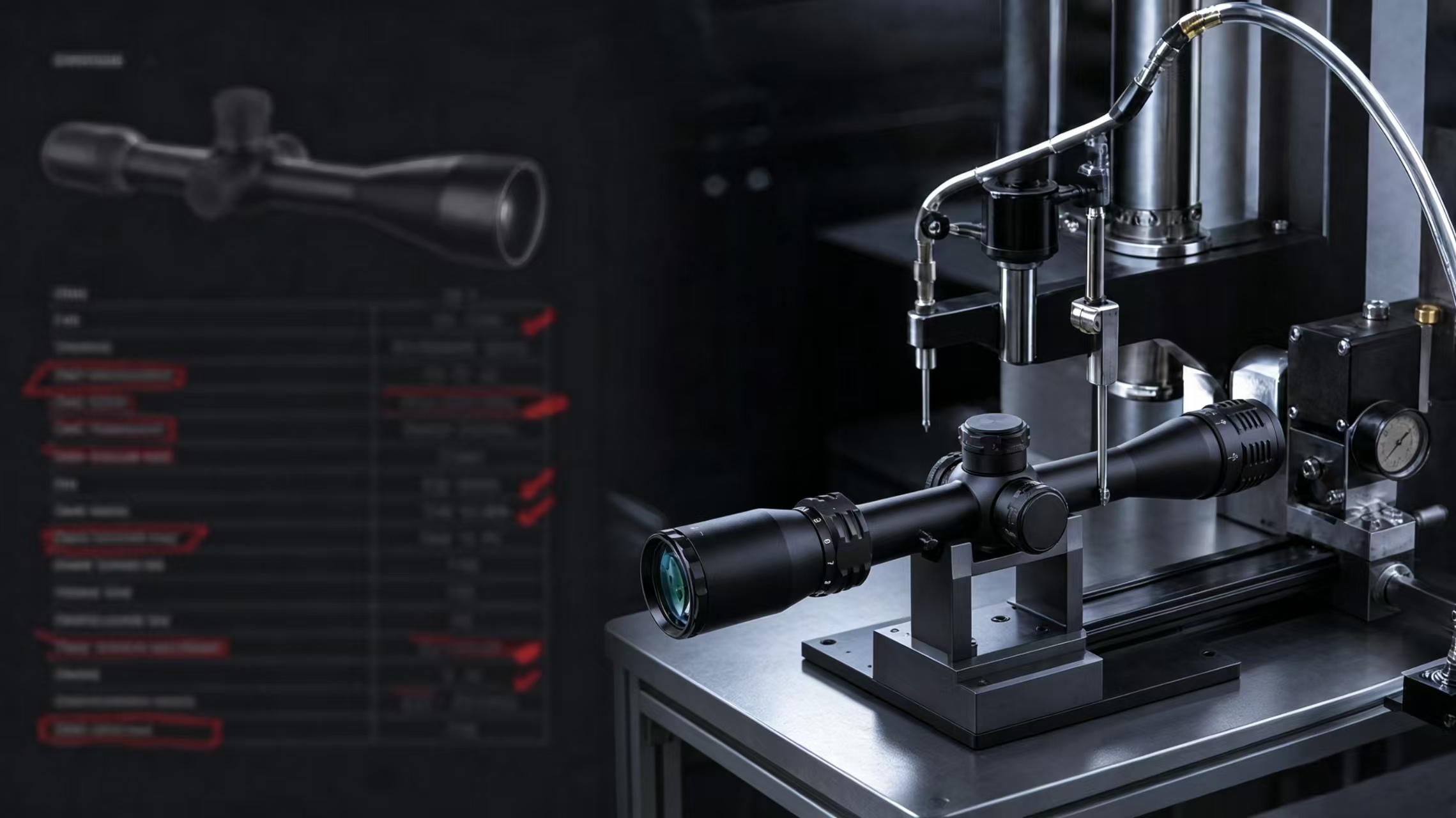
Many low-tier factories overmark parameters to compete on price. Their products pass only basic static inspections but fail completely under real tactical and outdoor conditions. This creates a hidden loss chain for dealers: low procurement cost → high return rate → negative store reviews → damaged long-term reputation.
To help optics buyers avoid unnecessary losses, we summarize 5 critical truths that spec sheets never tell you:
1.Printed Shockproof Grade ≠ Real Recoil Resistance
Many budget scopes mark “shockproof” on spec sheets, but this only covers static drop tests, not repeated live-fire recoil. Continuous high-frequency vibration gradually shifts internal assemblies and turret parts. Plenty of units hold zero out of the box yet drift after dozens of rounds. When sourcing, prioritize long-term recoil test records instead of only one-time drop test data.
2.Coating Layers ≠ Actual Light Transmission
Labels like FMC (Fully Multi-Coated) are widely used as marketing tactics. Low-grade coatings create heavy glare and color distortion, especially during dawn and dusk. Genuine high light transmission depends on stable dielectric coating craftsmanship. Do not evaluate optical performance based merely on printed coating specifications.
3.IP Waterproof Rating ≠ Salt Fog & Outdoor Durability
A basic IPX7 rating only guarantees short-term immersion in clean fresh water. It cannot reflect long-term durability under temperature swings, coastal salt mist or humid environments. Inferior seals degrade over time, triggering internal fogging and mildew. For tropical or coastal markets, confirm salt-fog and thermal cycling test results separately.
4.Adjustable Objective (AO) Does Not Equal Accurate Parallax Correction
The AO mechanism is designed to eliminate parallax, yet many mass-produced scopes have obvious parallax blind zones from 50–150 yards, a widely used shooting range. End users struggle to achieve precise aiming even after repeated adjustments, which easily generates returns. Always sample and test parallax at multiple distances before bulk orders.
5.Uniform Specs ≠ Batch Consistency
This is the most overlooked risk. Suppliers may deliver perfect samples, but mass production often loosens assembly tolerances. Turret tension, nitrogen sealing and internal alignment can vary widely between batches. A smooth trial order does not guarantee consistent quality for later shipments. Reliable batch QC matters more than attractive printed parameters.
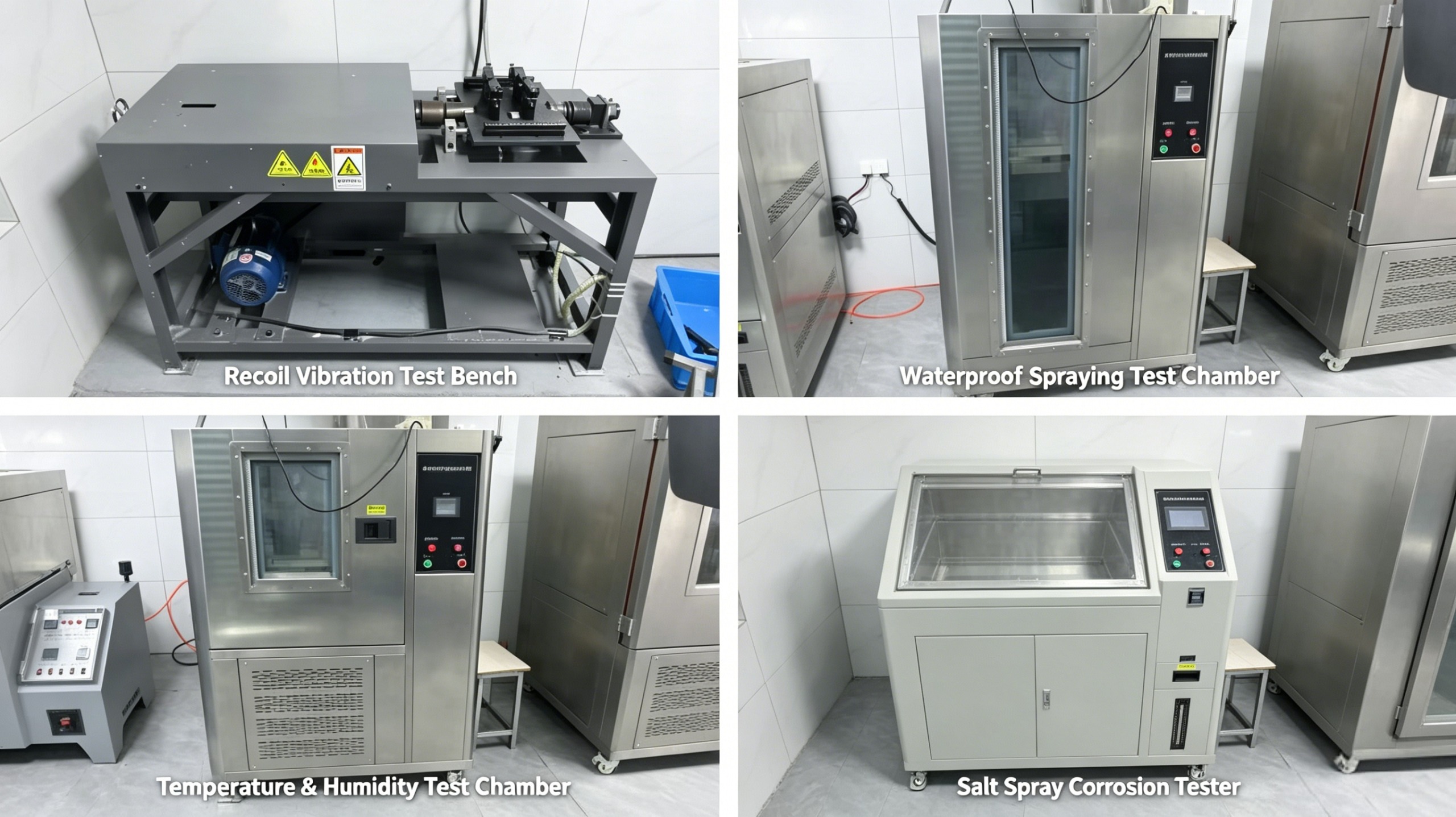
For optics businesses of all sizes, stable quality is far more important than low prices.As a professional optics manufacturer platform serving wholesale clients, we refuse to inflate product parameters to win orders. Every batch of red dot sights and riflescopes undergoes recoil testing, nitrogen sealing inspection, parallax calibration and aging tests before shipment.
If you want to steer clear of misleading parameter labels and cut after-sales losses caused by untested optics, contact us to get genuine test data and sample evaluation support.